
This article may contain affiliate links. If you click a link and make a qualifying purchase, we may earn a commission — at no extra cost to you. We participate in affiliate programs including ShareASale, CJ Affiliate, and Impact. Full disclosure →
Markets React Sharply to Escalating Geopolitical Tensions
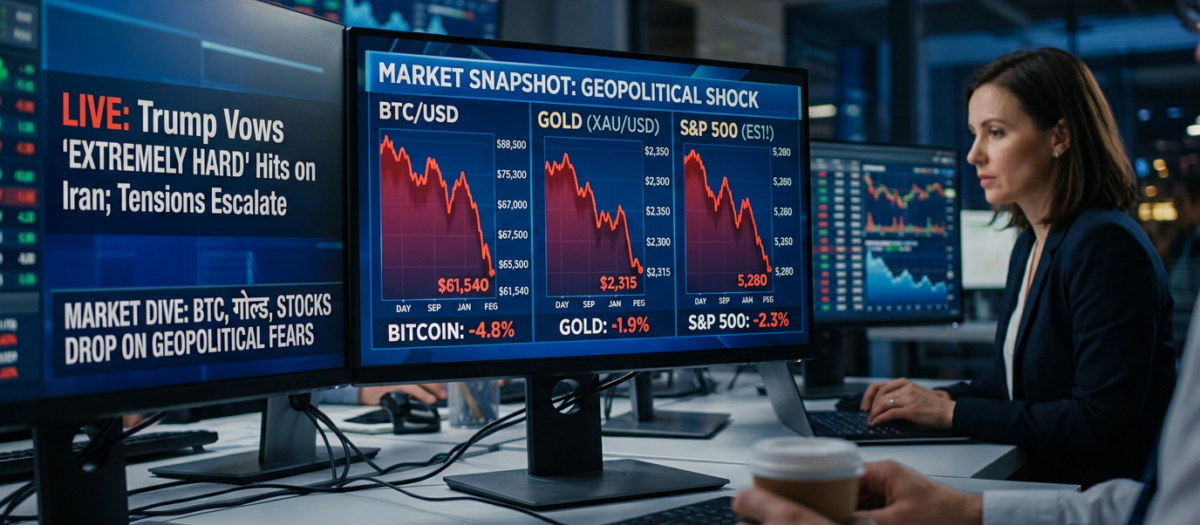
Bitcoin, gold, and U.S. equities all decline significantly following former President Donald Trump’s latest remarks on Iran. Trump vows to strike Iran “extremely hard” while asserting that the conflict is nearing its conclusion—yet provides no concrete strategy for resolving the critical blockade of the Strait of Hormuz. This uncertainty sends shockwaves through global markets, prompting investors to flee risk assets in favor of cash and short-term Treasuries.
Bitcoin’s Correlation With Traditional Safe Havens
Bitcoin, often touted as “digital gold,” initially struggles alongside its physical counterpart. The cryptocurrency drops nearly 5% within hours of Trump’s statement, reinforcing its growing sensitivity to macroeconomic instability. While historically seen as a hedge against inflation and geopolitical turmoil, recent trends suggest Bitcoin remains vulnerable to sudden liquidity crunches.
Key takeaways:
– Bitcoin’s short-term price action increasingly mirrors traditional markets during crises.
– Geopolitical instability can trigger rapid sell-offs, even in assets considered hedges.
Gold and Equities Face Pressure
Gold, typically a haven during turbulent times, also falls—a rare occurrence that underscores the severity of market anxiety. Analysts speculate that traders may be liquidating gold positions to cover losses elsewhere or anticipating a stronger dollar if the U.S. escalates military action. Meanwhile, major U.S. stock indices slide, with the S&P 500 dropping over 2% as investors price in heightened risks of prolonged conflict disrupting global trade.
The Strait of Hormuz: A Critical Flashpoint
The Strait of Hormuz handles roughly 20% of global oil shipments, making any disruption a direct threat to energy markets and broader economic stability. Trump’s failure to outline a clear resolution spooks traders, who fear prolonged supply chain bottlenecks could exacerbate inflationary pressures. Oil prices initially spike before retreating as traders weigh conflicting signals about potential de-escalation.
What This Means for Investors
Market reactions highlight how quickly sentiment can shift in response to geopolitical rhetoric. While Bitcoin and gold have traditionally served as hedges, their recent behavior suggests that no asset is entirely immune to panic selling. Investors should consider:
– Diversification: Spreading exposure across uncorrelated assets can mitigate sudden downturns.
– Liquidity Management: Maintaining cash reserves ensures flexibility during volatility spikes.
As tensions persist, markets will likely remain volatile, with traders closely monitoring developments in the Middle East and Washington for clearer signals.
Financial Disclaimer: This article is for informational purposes only and does not
constitute financial, investment, or legal advice. Cryptocurrency markets are highly volatile.
Always conduct your own research and consult a qualified financial advisor before making any
investment decisions. Past performance is not indicative of future results.
This site may contain editorial opinions. We do not receive compensation for editorial
coverage. See our editorial policy for details.
One thought on "Bitcoin, Gold, and U.S. Stocks Dive as Trump Pledges to Hit Iran ‘Extremely Hard’"
Comments are closed.