
This article may contain affiliate links. If you click a link and make a qualifying purchase, we may earn a commission — at no extra cost to you. We participate in affiliate programs including ShareASale, CJ Affiliate, and Impact. Full disclosure →
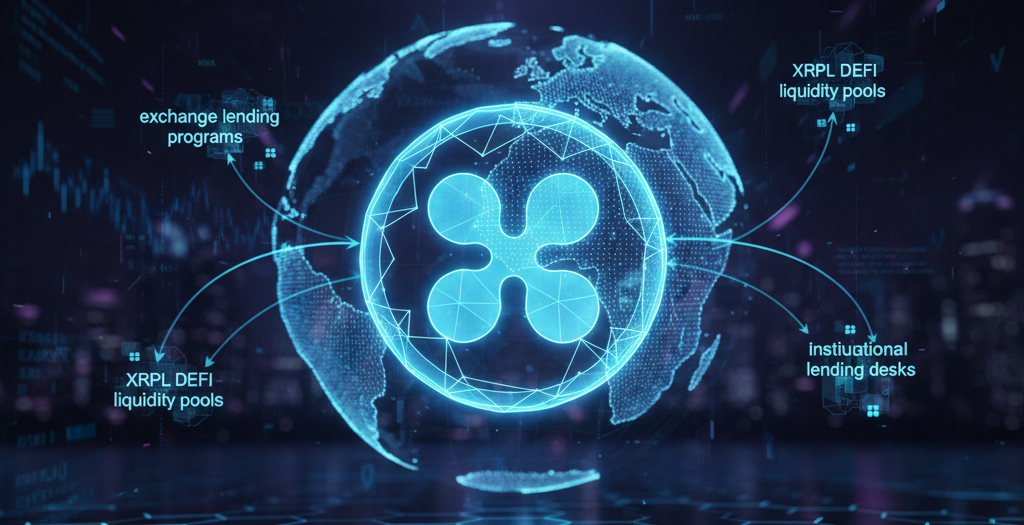
XRP lending allows you to earn passive income on your XRP holdings without selling. In 2026, several options exist: exchange lending programs, XRPL native DeFi protocols, and institutional lending desks. Each carries different risk profiles and yield rates.
Exchange Lending Programs
Kraken Earn
Kraken offers an XRP lending/staking program that allows eligible users to earn yield by lending their XRP to Kraken’s institutional clients. Rates typically range from 1–3% APY depending on market conditions and demand. Funds are accessible (not locked), and Kraken handles all the lending logistics.
Risk: Exchange counterparty risk — if Kraken faces a liquidity crisis (like FTX did in 2022), your lending funds could be at risk. Kraken is one of the most regulated and financially sound exchanges, but the risk is not zero.

Bitget Earn
Bitget offers flexible and fixed-term XRP earn products with rates up to 5% APY for fixed-term deposits. Fixed terms typically lock funds for 7, 14, or 30 days in exchange for higher rates.

XRPL DeFi Lending
AMM Liquidity Provision
The XRPL AMM (launched 2024) allows users to earn trading fees by providing liquidity to XRP trading pairs. For stable pairs like XRP/RLUSD, annual returns from fees typically range from 3–8% depending on trading volume through the pool. This is non-custodial — your funds remain on the XRP Ledger, not with a centralized entity.
XRPL Lending Protocols
Several lending protocols have launched on the XRP Ledger, using the ledger’s IOU and DEX mechanisms to facilitate peer-to-peer lending. Users can deposit XRP or stablecoins and earn yield from borrowers who use XRP as collateral.
These protocols are typically overcollateralized: borrowers must deposit 150%+ in XRP to borrow stablecoins, providing a buffer against price drops. If collateral value falls below the minimum ratio, liquidations occur automatically through the XRPL DEX.
Institutional Lending Desks
For large holders (typically $100,000+ in XRP), institutional lending desks offer OTC lending arrangements with custom rates. Companies like Galaxy Digital, Coinbase Prime, and Anchorage Digital facilitate XRP lending for institutional clients.
Rates for institutional XRP lending typically range from 3–6% APY with terms negotiated directly. The minimum thresholds and legal requirements make this inaccessible to most retail investors.
XRP Yield Comparison
| Method | Est. APY | Custody | Liquidity | Risk Level |
|---|---|---|---|---|
| Exchange flexible earn | 1–3% | Custodial | Immediate | Medium (exchange risk) |
| Exchange fixed earn | 3–5% | Custodial | Locked (7–30 days) | Medium |
| XRPL AMM (stable pair) | 3–8% | Non-custodial | Immediate | Medium (IL risk) |
| XRPL DeFi lending | 4–10% | Non-custodial | Depends on protocol | Medium-High |
| Institutional OTC | 3–6% | Custodial (OTC desk) | Negotiated | Low-Medium |
Key Risks to Understand
- Exchange counterparty risk: If the exchange becomes insolvent (FTX 2022), lent funds may not be recoverable. Use only regulated, financially strong exchanges.
- Smart contract / protocol risk: DeFi protocols can have bugs. Only use audited, established protocols.
- Impermanent loss: AMM liquidity provision can result in lower value than simply holding XRP if prices move significantly.
- XRP price risk: Even if you earn 5% yield, a 50% drop in XRP price wipes out years of yield earnings.
- Regulatory risk: Lending products may be restricted in certain jurisdictions.
Bottom Line
XRP lending and yield strategies offer attractive returns for patient holders — particularly XRPL AMM liquidity provision for non-custodial yield, and Kraken Earn for custodial simplicity. Always prioritize understanding the risks before committing funds to any yield product. As with all crypto investments, only allocate what you can afford to have locked or at risk.
Disclaimer: This article is for informational purposes only. DeFi and exchange yield products carry significant risks.